
He rued that people who work hard and honestly are put through enormous difficulties and Indians excel in making an ordinary task into an extraordinary one.

'The assessment of most people is that there is a stable economic and political environment in India and that is attractive to investors.'

India's GDP estimates for 2020-21 show that the economy is expected to perform much better than earlier projections by different agencies, indicating a sustained V-shape post-lockdown recovery, experts said. The first Advance Estimates (AE) by the National Statistics Office (NSO) has projected a contraction of 7.7 per cent in the real GDP during 2020-21. This was better than the projections by certain international agencies like the IMF and World Bank.

'They have since only tried to improve systems. Also, with regulatory guidance from time to time, we are in a position to assess a situation and react in time.'

Inflation trajectory, domestically as also globally, is what will shape the economy, and therefore the market, over the next couple of quarters.'

'As valuations of large-caps appeared to be out of whack, investors started lapping up quality mid-caps and small-caps, which were available at relatively comfortable valuations.'

So far, inflation outcomes have closely tracked these projections.

The criticism that the Reserve Bank of India was behind the curve in hiking interest rate to tame rising inflation is unfair, former RBI Governor D Subbarao said on Wednesday and asserted that it is difficult for any central bank to anticipate the future more accurately. Earlier this month, Monetary Policy Committee (MPC), the central bank's rate-setting panel, surprised the markets with a 40 basis points hike in repo rate in an off-cycle policy meeting. It was also the first rate hike after August 2018, amid spiralling inflation.

With retail inflation surprising on the upside, the six-member monetary policy committee (MPC) of the Reserve Bank of India (RBI) is expected to increase the repo rate by 35-50 basis points (bps) in the review scheduled for September 28-30. According to economists, the central bank will continue to focus on bringing inflation down even though economic growth has remained sluggish. Data released by the government on Monday showed that the consumer price index (CPI)-based inflation increased by 7 per cent year-on-year (YoY) in August, thus, staying above the upper tolerance limit of the central bank for all the eight months of 2022.

India's inflation trajectory in the coming months will be influenced more by the geo-political situation due to the war in Europe and its impact on supply chains and commodity prices. However, the country is better placed than most to "weather the storm" and achieve growth of close to 8 per cent in the current fiscal year, the finance ministry said in its latest monthly economic report on Thursday. "Through the channel of imports, elevated global crude and edible oil prices now have a significant impact on India's inflation outlook. "Government measures to keep the prices of these commodities in check, along with the recent hike in policy rates by the RBI, are expected to temper inflationary pressures in the economy," the monthly economic report for April, drafted by the finance ministry's economic division, said.

'This encourages escapism through the politics and economics of nationalism, made worse by tribalism or nativism, the package accompanied inevitably by the erosion of institutional bulwarks and therefore State capture by powerful businessmen,' notes T N Ninan.
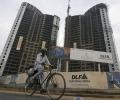
In mid-2020, when Kushal Pal Singh, the undisputed king of India's vast real estate market, relinquished the top post at the country's largest realtor, he left behind an empire that is best compared to the Greek myth of the Phoenix. Once the leader of Delhi's organised real estate market, DLF's steep decline in the 1970s and its majestic rise since has often been cited as a business resurrection story. Now, a year after his departure from the helm of affairs, history seems to be repeating itself at the real estate major. In the 1970s, it was the government prohibitions that had forced DLF to venture into uncharted territory; some five decades later, the Delhi-headquartered firm has set its eyes on another growth trajectory that holds immense potential.

Fitch Ratings has cut India's economic growth forecast to 8.7 per cent for the current fiscal but raised GDP growth projection for FY23 to 10 per cent, saying the second COVID-19 wave delayed rather than derail the economic recovery. In its APAC Sovereign Credit Overview, Fitch Ratings said India's 'BBB-/Negative' sovereign rating "balances a still-strong medium-term growth outlook and external resilience from solid foreign- reserve buffers, against high public debt, a weak financial sector and some lagging structural factors". The 'Negative' outlook, it said, reflects uncertainty over the debt trajectory following the sharp deterioration in India's public finances due to the pandemic shock.

It's the first time in my memory that I have seen a negative expected return for equities, notes Akash Prakash. Hopefully, this implies the consensus is being too negative, and markets, as usual, will surprise everyone and deliver the least likely outcome.

The wide-based NSE sensitive index is currently hovering around 7,900.
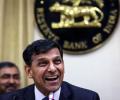
Growth acceleration will be gradual and it is still early days for a sharp recovery, says Gautam Chhaochharia, executive director and head of India research, UBS.

'It is a balanced and prudent Budget that sets the foundation for future growth in the economy.'

'Given that the economy is going through a slowdown, further downward revisions of the 2019-2020 growth estimates cannot be ruled out,' notes A K Bhattacharya.

However, Icra Rating Principal Economist Aditi Nayar feels that the numbers are a bit too optimistic and need real heavy-lifting by the Centre and the states. "The survey forecasts on real and nominal GDP will require a substantial push from Central and state spending as private sector capacity expansion is anticipated to be intermittent, and sector-specific in the next couple of quarters," she said. Nayar added that private consumption is likely to chart a differentiated recovery across income and age groups. Based on the comments made in the Survey, she expects the Union Budget to incorporate a growth in gross tax revenue of 15-16 per cent.

"GST should not become a 'grossly scary tax'. It should be a 'good and simple tax'," Surjewala said.

The long-term growth perspective or potential for India is one of the highest in the Asia Pacific region.

The likelihood is that India will maintain a moderately upbeat economic tempo -- well short of tearaway growth, explains T N Ninan.

The government plans to bring down its stake to 26 per cent in these two banks, which are yet to be identified. This may not come in the way of getting investors for these banks, provided the government is willing to step back rather than run them the way it had been doing for over five decades since these banks were nationalised, points out Tamal Bandyopadhyay.

The employment situation remains dire. Whatever can be done to promote greater low-skill employment should be pursued aggressively, advises former chief economic adviser Shankar Acharya.

'India's march towards being a $5 trillion economy continues, notwithstanding momentary setbacks.' 'India is at an inflexion point and most economists believe this growth super-cycle will extend for over four decades.'

The budget-making exercise offers golden opportunities despite challenges, observes Shankar Acharya, former chief economic adviser to the Government of India.

Xi does not want to risk any political or economic crisis complicating his bid to remain in office, observes Ambassador Shyam Saran, the former foreign secretary.

'Thankfully, most investors in India have now seen through this false narrative and are once again deploying their hard-earned money.
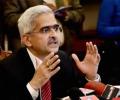
The Reserve Bank of India on Friday decided to leave benchmark interest rate unchanged at 4 per cent but maintained an accommodative stance as the economy faces heat of the second Covid wave.

Supported by slightly stronger global growth, improving export competitiveness and implementation of recently approved investment projects, India's growth is expected to recover from 4.4 per cent in 2013 to 5.4 per cent in 2014, the IMF said.

Here are the key decisions announced by the Reserve Bank of India on Thursday.

The steady rise through most of July implies a greater demand for jobs. And most of this demand is being met, says Mahesh Vyas.
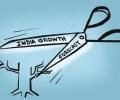
SBI economists on Tuesday sharply slashed their FY22 GDP growth estimates to 7.9 per cent - the lowest among all analysts - from the earlier projection of 10.4 per cent growth. The economists at the state-run lender seemed to attribute the impact of the second wave of COVID-19 infections as a key factor for the revision in the growth estimate, and pitched for faster vaccination. "... our analysis shows a disproportionately larger impact on the economy this time and given that rural is not as resilient as urban, the pick-up in pent-up demand is unlikely to make a large difference in FY22 GDP estimates, and hence it could only be a modest pick-up," they said.

'Such big falls are quite frequent these days, so do not try to time this market.' 'Use big dips to accumulate quality stocks.'

The economy has shown sharp resilience in the past and has also bounced back in good time. We could hence expect a similar trajectory next year, observes Madan Sabnavis, chief economist, CARE Ratings.

The Centre could better its fiscal deficit at 6.6 per cent of GDP in this financial year on stronger-than-expected revenue buoyancy, even if the budgeted disinvestment target is not met, Fitch Ratings has said. The international rating agency had last week kept the sovereign rating unchanged at 'BBB-' with a negative outlook, and said that the risks to India's medium-term growth outlook are narrowing with rapid economic recovery from the pandemic and easing financial sector pressures. In an email interview with PTI, Fitch Ratings Director (Asia-Pacific Sovereigns) Jeremy Zook said the two key positive triggers that could lead to a revision of the outlook to stable are implementation of a credible medium-term fiscal strategy to lower debt burden and higher medium-term investment and growth rates without the creation of macroeconomic imbalances, such as from successful structural reform implementation and a healthier financial sector.

Housing sales are likely to rise by 30 per cent across seven major cities to nearly 1.8 lakh units in 2021, but demand will still be lower than the pre-COVID levels, according to property consultant Anarock. According to Anarock research, housing sales are expected to increase 30 per cent year-on-year (y-o-y) to 1,79,527 units across seven cities in 2021 from 1,38,344 units last year. In 2019, housing sales stood at 2,61,358 units across seven cities -- Delhi-NCR, Mumbai Metropolitan Region (MMR), Pune, Bengaluru, Hyderabad, Chennai and Kolkata.

The database of 194 companies has shown a revenue contraction of 2.6%.

'It will be best for investors to have a systematic investment plan in mid-cap and small-cap funds with a three-/five-year horizon.'
The broad trends of GST collections will make you wonder if indeed the biggest indirect tax reform in the country has led to a real improvement in revenues, notes A K Bhattacharya.
 © 2026 Rediff.com - Investor Information - Advertise with us - Disclaimer - Privacy Policy - Sitemap - Feedback - About us - Terms of use - Grievances